Our History
The Beginning
Gurukul was founded by a group of passionate educators with a vision to preserve Indian cultural heritage.
Growth & Expansion
Opened our second campus in Bellevue and introduced advanced Sanskrit studies program.
Digital Transformation
Launched online learning platforms while maintaining traditional teaching methods.
Community Impact
Established cultural exchange programs and community outreach initiatives.
Looking Forward
Expanding our programs and reaching more students across the Pacific Northwest.
The Gurukul Journey
Founded in 2010, Gurukul began with a simple yet profound mission: to create a bridge between traditional Indian education and modern learning methods. Our journey started with just 15 students and 2 dedicated teachers.
Our Evolution
Through the years, we've grown not just in numbers but in our impact on the community. We've maintained our core values while adapting to changing times, incorporating technology and modern teaching methods without losing sight of our traditional roots.
Community Impact
Our students have gone on to become cultural ambassadors, carrying forward the torch of Indian heritage while excelling in their chosen fields. We've built strong partnerships with cultural organizations across the United States and India.
The Gurukul System: Ancient India's Holistic Education Legacy
The Gurukul system, an ancient Indian educational methodology dating back to the Vedic period (c. 1500 BCE - 500 BCE), represents one of humanity's earliest formal education systems. This traditional model of learning and character development has left an indelible mark on Indian educational philosophy and continues to inspire modern pedagogical approaches.
Origins and Historical Context
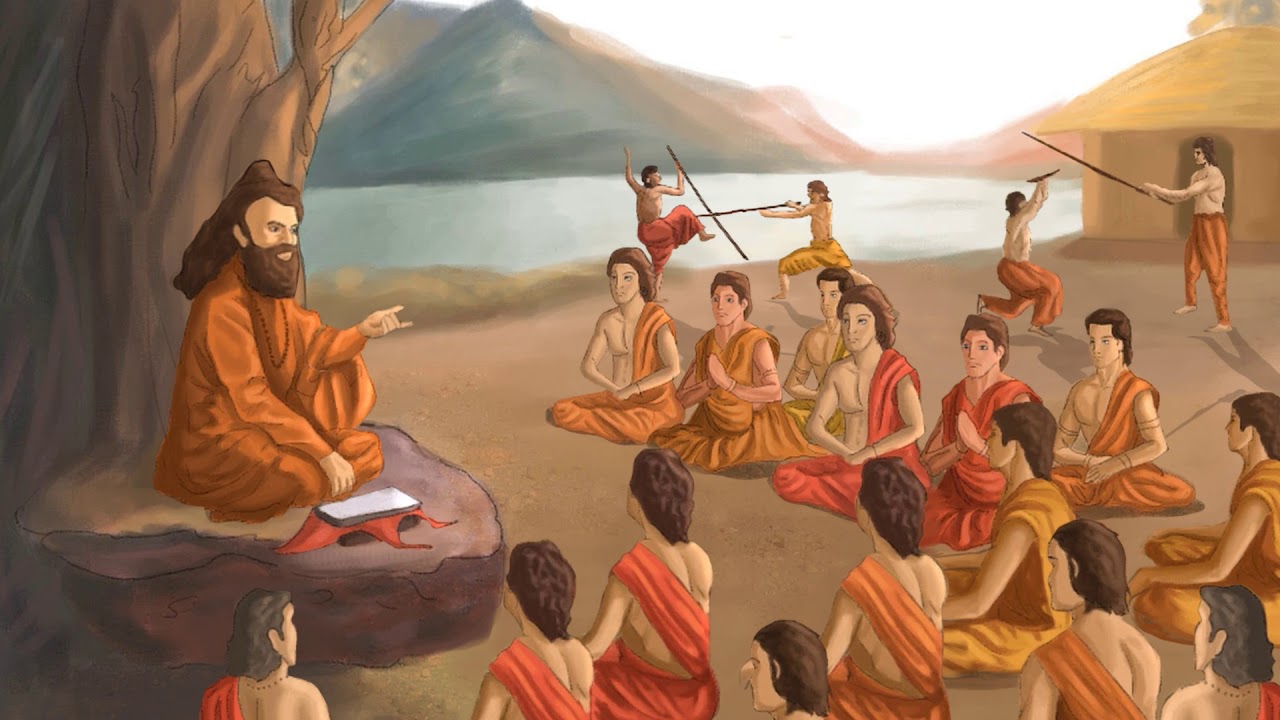
The word "Gurukul" derives from the Sanskrit terms "Guru" (teacher) and "Kula" (family or home), literally meaning "the family/home of the teacher." This etymology reflects the system's fundamental principle: education occurred within the teacher's household, where students lived as family members throughout their learning journey.
The origins of the Gurukul system can be traced to the Vedic period when knowledge was primarily transmitted orally. The system emerged from the need to preserve and pass down the vast corpus of Vedic literature, including the Vedas, Upanishads, and other sacred texts. Ancient texts like the Bhagavad Gita and various Upanishads contain numerous references to this educational system, suggesting its widespread acceptance and implementation across ancient India.
Core Principles and Values
Holistic Development
The Gurukul system emphasized the development of the complete individual rather than merely imparting subject knowledge. This holistic approach encompassed:
- Physical development through yoga, martial arts, and daily physical labor
- Mental development through academic studies and intellectual discussions
- Spiritual growth through meditation and religious practices
- Character building through discipline and ethical living
- Social development through community living and service
Teacher-Student Relationship
At the heart of the Gurukul system lay the sacred bond between the Guru (teacher) and Shishya (student). This relationship transcended mere academic instruction, with the Guru assuming the role of a mentor, guide, and spiritual parent. The intimate nature of this relationship allowed for:
- Personalized attention and guidance
- Character assessment and development
- Transmission of practical wisdom beyond textual knowledge
- Development of emotional intelligence and social skills
Daily Life and Routine
Students in Gurukuls followed a strictly disciplined daily routine:
- Pre-dawn rising for meditation and spiritual practices
- Participation in household chores and maintenance
- Regular academic sessions interspersed with physical activities
- Evening studies and discussions
- Community service and practical application of learned skills
Educational Methodology
Customized Learning
The Gurukul system practiced what modern educators would call "differentiated instruction." Teachers adapted their teaching methods based on:
- Individual student's learning capacity
- Natural inclinations and talents
- Character traits and personality
- Career aspirations and family background
Practical Application
Knowledge was not merely theoretical but was integrated with practical application. Students learned through:
- Direct observation and experimentation
- Hands-on practice and skill development
- Real-world problem-solving
- Community service projects
Benefits and Advantages
Academic Excellence
The system's focused approach to education, free from modern distractions, often resulted in:
- Deep understanding of subjects
- Strong analytical and critical thinking skills
- Excellence in chosen fields of study
- Development of extraordinary memory and concentration
Character Development
The system placed equal emphasis on character development, fostering:
- Self-discipline and self-control
- Ethical behavior and moral values
- Leadership qualities
- Emotional intelligence and empathy
Life Skills
Students developed crucial life skills through:
- Community living and cooperation
- Self-reliance and practical skills
- Time management and organization
- Communication and interpersonal skills
Modern Relevance and Revival
While the traditional Gurukul system may not be entirely replicable in modern times, its principles continue to influence contemporary education:
Modern Adaptations
Several educational institutions have incorporated Gurukul principles into modern settings:
- Residential schools combining traditional and modern education
- Value-based education programs
- Mentorship programs in educational institutions
- Integration of spiritual practices with academic curriculum
Lessons for Modern Education
The Gurukul system offers valuable insights for contemporary education:
- Importance of mentor-student relationships
- Benefits of holistic development
- Value of practical application in learning
- Role of character development in education
Challenges and Considerations
While the Gurukul system offers many advantages, its implementation in modern times faces several challenges:
- Adaptation to contemporary educational requirements
- Integration with technology and modern teaching methods
- Meeting standardized educational benchmarks
- Balancing traditional values with modern needs
Conclusion
The Gurukul system represents a comprehensive educational philosophy that extends beyond academic achievement to encompass character development, practical skills, and spiritual growth. While its traditional form may not be entirely suitable for modern times, its principles and values continue to offer valuable insights for contemporary education. As we face the challenges of preparing students for an increasingly complex world, the holistic approach of the Gurukul system provides important lessons about the true purpose and potential of education.